
AI Product Photo Editor

Quick Picks:

Single Edit uses one source image.

230 / 20000
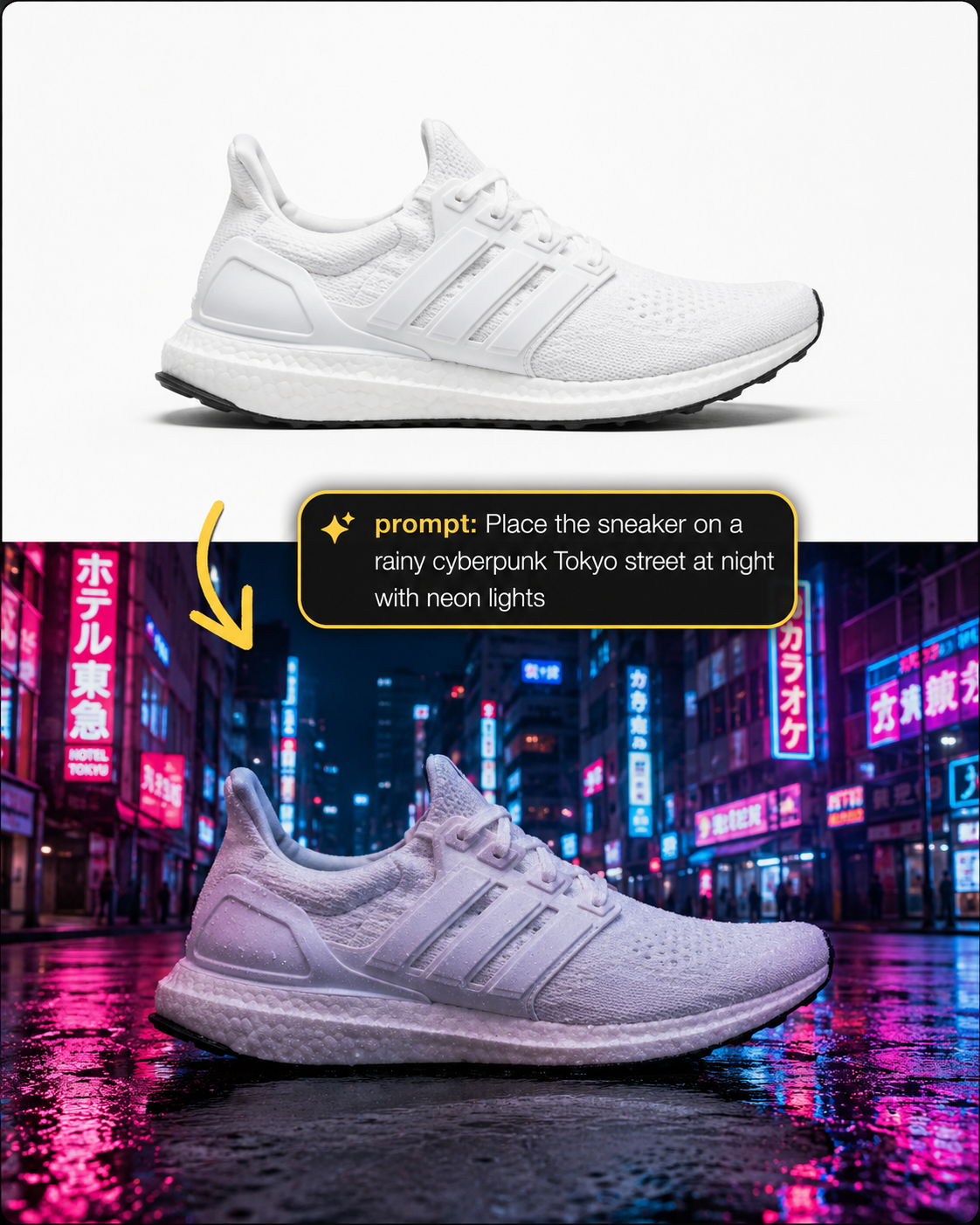
White sneaker on a plain backdrop and in a neon-lit street, illustrating a product scene change

Explore a campaign setting

Scene example

White sneaker on a plain backdrop and in a neon-lit street, illustrating a product scene change

A white sneaker shown against a studio backdrop and a neon street.

The scene changes the mood and apparent color of the shoe. This illustration is useful for comparing creative directions, but a dramatic scene is not necessarily a suitable listing photo. Compare materials, sole shape, stitching, and colors with the source before choosing an image to publish.

Product photo prompt ideas

Choose a shoot brief and adapt it to your product. Each request creates one image; compare different directions in separate edits.

How to edit a product photo with AI

A clear source and a careful final comparison matter as much as the scene brief.

01

Upload a product image

Choose a sharp photo with the whole item visible and labels readable. Hidden surfaces and unreadable text cannot be reliably reconstructed from a prompt.

02

Describe the final look

Specify the surface, backdrop, light direction, and intended crop. Name the product details to preserve, such as stitching, packaging text, color, and proportions.

03

Preview and refine

Compare the result with the source at full size. Reject changed labels, extra accessories, or incorrect materials. Download a suitable image, or simplify the brief and retry with sufficient credits.

Better product images with AI

Use existing product photos to explore backgrounds, lighting, and compositions for listings and campaigns.

Accuracy first

A product photo editor should protect the item

A listing image needs to match the item a buyer receives. Generative editing may change markings, shape, or material even with a detailed prompt. Treat the original photo as your reference and reject inaccurate results. Use conventional retouching when you need the product pixels to remain exactly unchanged.

Try the editor
Scene planning

Use AI product photography for fast variations

Compare a white listing background, a kitchen counter, and a studio display in separate edits. Keep the source angle and product details consistent in each brief. This workflow starts with a real product image and produces one result per request; it does not automatically build a catalog or generate a batch of SKU images.

Product image editor details that matter

Check product accuracy before deciding whether a more polished composition is usable.

Keep product details

Compare label text, stitching, hardware, packaging, and surface texture. A plausible-looking detail can still be different from the product you sell.

Choose the background

Match the scene to the item: a kitchen counter for kitchenware, a desk for stationery, or a studio sweep for a catalog concept. Keep distracting props away from the product.

Control shadows

Check where the product touches the surface and whether reflections fit the scene. Avoid shadows that make an item look suspended or change its apparent shape.

Make versions for channels

Specify the intended crop and empty space for an ad or banner. Add final text in a layout tool, and check each marketplace's current image requirements before publishing.

Product photo editing notes

Choose the appropriate workflow for single products, reference scenes, and catalog work.

Use AI Image Combiner with Multi Fusion. Upload the source images and describe which products belong in the final composition. It produces one combined result, not separate edited files. Review relative size, missing items, and changed details carefully.
Use Multi Fusion with the product photo and a scene reference you have permission to use. Identify each image's role and state which product details should remain unchanged. The generated setting may differ from the reference.
This editor creates one result per request. Multi Fusion combines several references into that result; it is not batch processing. Edit individual catalog images separately and compare their colors, framing, and background consistency.
It can help explore settings and compositions from an existing photo. It cannot establish the accurate appearance of unseen surfaces or replace factual product documentation. Use a real shoot when you need new angles or exact detail that the source does not show.

Edit a product photo

Start with your product image and choose a setting for the next edit.

Try AI product photo editor

Product photo edits worth testing

Build on photos of products you own or have permission to represent.

Online store listings

Try a plain background for a product photographed on a cluttered table. Verify product details, background color, and crop before using the image in your store.

Campaign concepts

Explore a seasonal backdrop or tabletop setting before planning a shoot. Compare scene ideas while keeping the actual product photo as your reference.

Social and ad visuals

Request a composition with room for a headline and the product clearly visible. Add final typography separately and review the image at its intended display size.

AI product photo editor FAQ

Q

Can I use this as a product photo editor online?

Yes. Upload an existing product image in your browser and describe the edit. A source image is required; this page does not generate a product from text alone.

Q

What type of product image works best?

Use a sharp image with the entire item visible and labels readable. Avoid glare that hides details or crops that cut off the product. Hidden or unreadable features cannot be reliably recovered.

Q

Can I change a product photo background?

Yes. Describe a white backdrop, studio display, or lifestyle scene and specify the details to preserve. Review the result because background edits can also change the product. A generated white background is not a transparent cutout.

Q

Can I make ecommerce product photos for free?

Available trial or daily credits can cover a request when your balance meets the selected model's cost. Check the balance and generation cost shown in the editor. Further edits require sufficient credits.

Q

Will the AI product photo editor change my product?

It may change details even with clear instructions. Ask it to preserve shape, color, label text, material, and proportions, then compare the result with the source. Reject inaccurate images and use conventional retouching when exact pixel preservation is required.